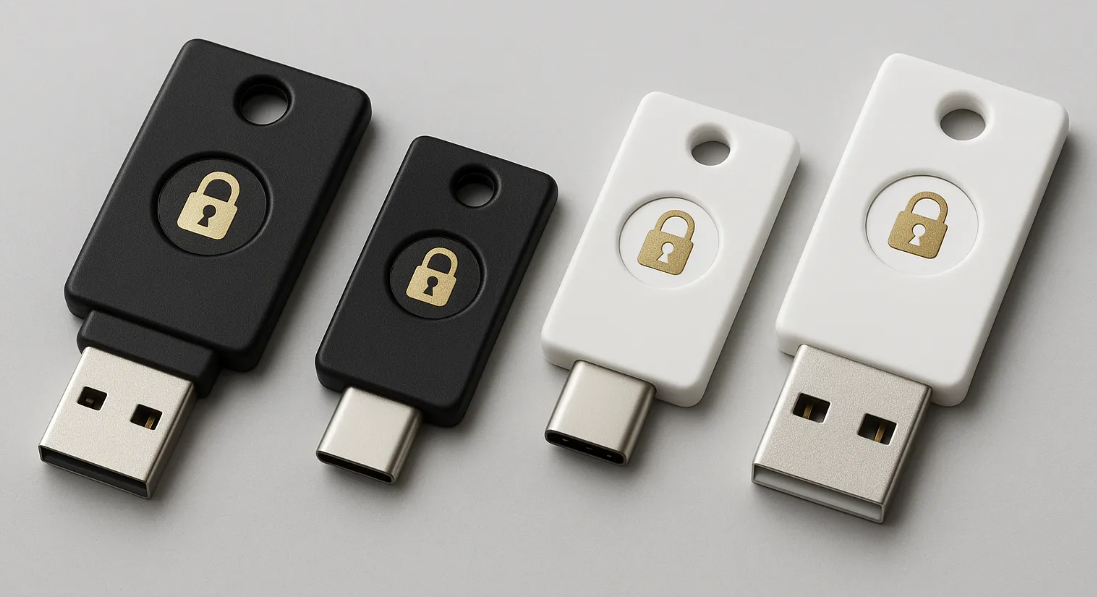
Convenience Cannot Drive Device Security
Biometric authentication has become synonymous with modern security. Face ID, fingerprint scans, and other biometric unlocks are fast, frictionless, and widely trusted by users and enterprises alike. But from a cybersecurity and identity perspective, there’s a critical flaw most people overlook:
Law enforcement can legally compel biometric authentication, BUT they cannot force you to reveal a passcode.
That distinction isn’t academic. It’s enforceable law, and it has real-world consequences.
The Legal Blind Spot in Biometric Authentication
In the United States, passcodes and passwords are typically protected under the Fifth Amendment because they are considered “knowledge-based secrets”. You cannot be compelled to disclose something you know. Biometrics are treated differently. Your face and fingerprints are considered physical characteristics, not secrets. Courts have repeatedly ruled that, with a valid warrant, law enforcement may compel biometric actions, like holding a phone up to a user’s face or placing a finger on a sensor. This gap recently became highly visible after a journalist’s devices were seized. Authorities were able to compel biometric access, but a passcode prevented full device compromise. Read more here.
From an identity security standpoint, the technology worked exactly as designed, but the
authentication method determined the outcome.
Why This Matters to Security and Identity Professionals
Security discussions often focus on defending against external attackers: malware, phishing, account takeover, and fraud. But identity risk also includes lawful access paths… scenarios where access is technically authorized, but privacy and control are lost.
The tradeoff looks like this:
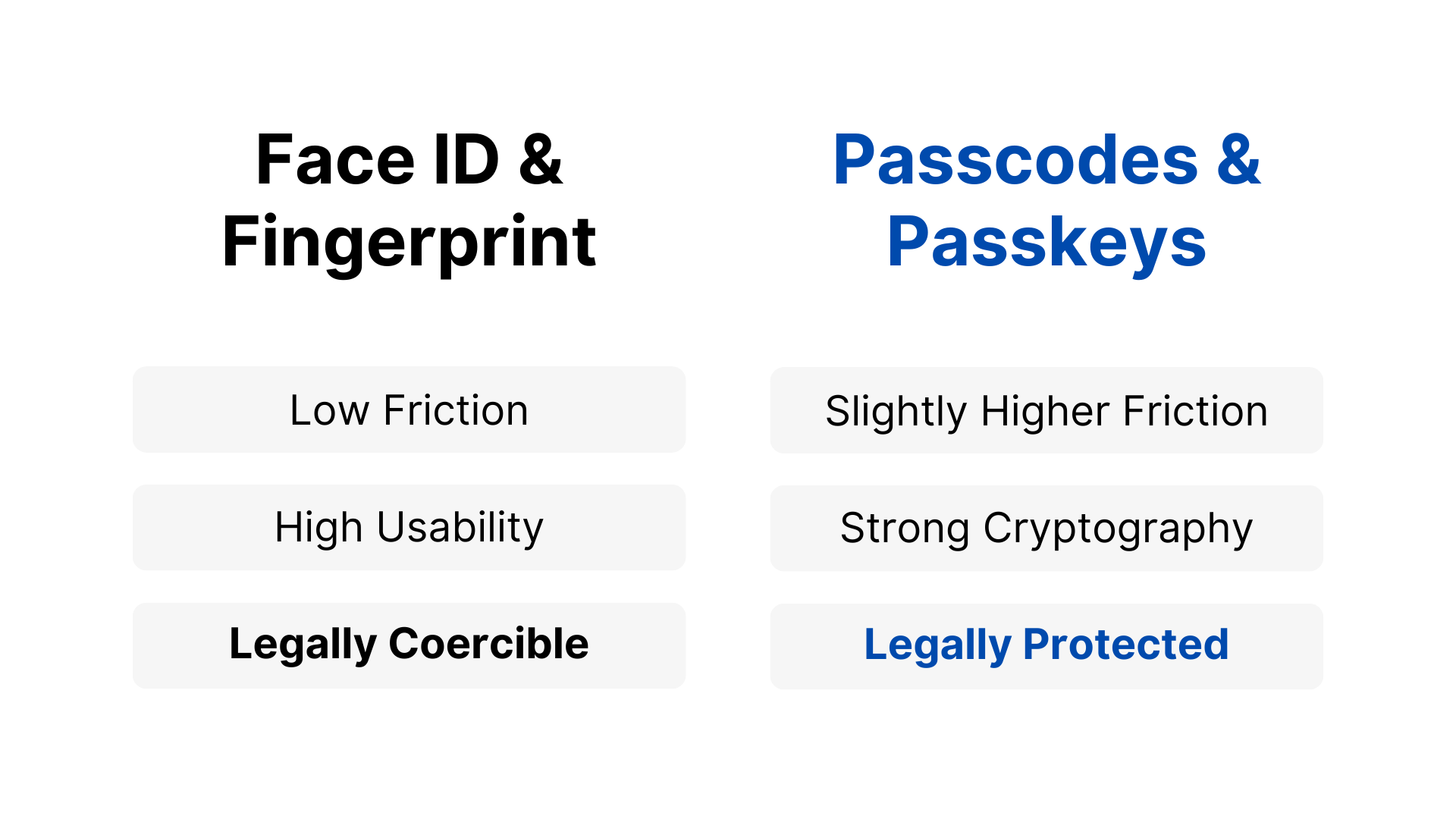
For many users, biometrics are acceptable. For
high-risk roles
like
journalists, executives, security leaders, developers, lawyers, activists, and anyone handling sensitive data, biometric-only unlocks introduce an avoidable exposure.
Identity Security Is More Than Stopping Hackers
Modern identity security isn’t just about preventing cybercrime. It’s about:
- Understanding threat models
- Accounting for legal and regulatory realities
- Designing authentication systems that protect users in worst-case scenarios
The Bottom Line
Biometrics optimize for convenience. Passcodes and passkeys optimize for
control, resilience, and privacy. If you’re responsible for securing identities (personal or enterprise) biometric convenience should never be the only factor driving authentication decisions.
Convenience ≠ privacy.
Your lock screen choice, and how passkeys are protected, matters more than most people realize.